Life with aphasia: Struggling to communicate
Aphasia doesn’t discriminate: The face of aphasia can be anyone. And when it strikes, it leaves a double blow, because for the one million Americans who suffer from aphasia, it is a struggle to explain what the disorder is like to live with—in more ways than one.
Aphasia is an acquired communication disorder that impairs people’s ability to process language, making it a strain to speak, write and understand others. So commemorate June, National Aphasia Awareness Month – as proclaimed for the last five years by Congress – by learning about what you can do to help those diagnosed with the disorder.
To advocate on these silent sufferers’ behalf, the National Aphasia Association raises awareness by providing education, resources and services to people with aphasia and their families. Founded in 1987, the charity is the first national organization dedicated to creating change and offering support for persons with aphasia.
“Aphasia can touch anybody,” Ellayne Ganzfried, the NAA’s executive director, said. “It is so important to be aware of it because in the blink of an eye, it can befall anyone, and your life can be changed. I think what people don’t understand is that a person with aphasia is still the same person on the inside.”
The organization’s biggest fight is to make the disorder understood. While aphasia hurts people’s ability to communicate, it does not affect their intelligence. Unable to convey their thoughts, aphasia patients can experience frustration in any of their interactions with others.
“Aphasia is kind of like being a person in a foreign country where you have your language in your head, but you don’t speak the language of the country, so you can’t get the words out to make them understand you,” Ganzfried said. “It’s like having something on the tip of your tongue constantly.”
The most common cause of aphasia is stroke, but it can also result from a head injury, brain tumor or other neurological causes. Whenever you have damage to the left side of the brain, where language is processed, you will more than likely get aphasia. There is no cure.
Martha Taylor Sarno, a speech language pathologist, founded the NAA upon realizing that while there were many organizations out there for professionals who treat aphasia, there was no organization focused on the individual with aphasia. Today, the organization stays true to its roots, including its commitment to having a number of its board members be individuals with aphasia or their family members. Current president Barbara Martin, for example, developed aphasia following a stroke at age 45.
Although aphasia results in difficulty communicating, frequently the real hardship is enduring the reactions of others.
“When you have difficulty communicating, people often immediately assume that you have difficulty with your intelligence,” Ganzfried said. “Or that when you start to speak, your speech doesn’t sound quite right, they may mistake you for someone who is under the influence of drugs or alcohol or who has some mental difficulty. And that’s absolutely not true.”
As Ganzfried notes, communication is one of our most human characteristics. Without the ability to communicate, people can become isolated and depressed.
“Most people are used to going out and socializing by communicating and speaking with one another and if you’re not able to do that, it affects all aspects of your life, including your ability to be employed,” Ganzfried said. More than 70 percent of people with aphasia cannot return to their previous jobs.
With of years of efforts under its belt, the NAA has definitely acquired some fans.
“If it had not been for the NAA, I probably would still not be able to read or write and (would) have just given up long ago … Living with aphasia is hard, but now I know that if I keep practicing and get some help, I will get better,” Tippy, an aphasia patient, said with the help of her son.
The NAA is fighting the above issues on all fronts: It manages a national hotline, a registry with more than 440 support groups and a state representative network boasting more than 220 volunteers who provide information in their geographic region. Recognizing that aphasia occurs across languages, the NAA’s multicultural taskforce supplies resources in a variety of languages, all free and downloadable off its website.
Another NAA program is aphasia awareness training, in which emergency responders—police, fire fighters and EMTs—learn what aphasia is and how to properly communicate with an aphasia patient during an emergency situation. The organization has also found success in the production and distribution of an animated DVD named “It’s Still Me,” a guide for people with aphasia and their friends and family.
As the theme for this year’s National Aphasia Awareness Month is “aphasia-friendly businesses,” the NAA is busy training local business on how to make their facilities accessible to those with aphasia and how to communicate with sufferers.
With a staff of only two for the national organization, the charity does its very best to get the word out. The organization lives for the day when aphasia becomes a commonly understood word, and everyone knows how and where to get help for the disorder.
For more information, visit the NAA’s website, www.aphasia.org, or its Facebook page.
Do you know someone with aphasia? Have you ever encountered someone suffering from it?
Tagged in: lux exclusives, charity, nonprofit, philanthropy, national aphasia association, aphasia, naa, national aphasia awareness month,
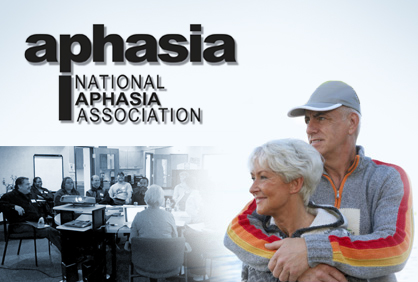
Purple Neon/LadyLUX via National Aphasia Association