What you may not know about vaccines: Both sides
Proponents say vaccinations save your child from deadly diseases. Opponents say they are full of harmful additives and cause serious side effects. Who is right? This article will cover the pros and cons of this medical practice and help you decide if vaccinating is the right path for your child.
To illustrate how vaccines make a positive difference, Janine Cory from the Centers for Disease Control and Prevention points to Haemophilus influenzae type b (Hib), a serious disease that usually hits children under the age of 5. Each year, thousands of cases were reported in the United States. After the vaccine was introduced, that number dropped to merely a handful.
“I think we have a lot of compelling evidence to show that vaccines are one of the single most important preventive medical breakthroughs in public health in the past 100 years,” Cory, a senior health communications specialist, said. “Talk to any of those parents whose babies could have been saved. Vaccines work.”
The polio vaccine is a popular example for vaccine advocates. The CDC maintains that in the 1940s, polio crippled more than 35,000 people in the United States each year, but today, due to the vaccine, polio has been eliminated nationally.
But not everyone looks at the numbers the same. Dr. Rod Escobedo, who teaches workshops on vaccine safety, asserts research shows that polio rates were actually declining before the vaccine, due to better sanitation.
“So we introduced the polio vaccine and then suddenly polio rates go up. That’s kind of interesting. It is all documented,” Escobedo said.
Both advocates and opponents rely on VAERS, the vaccine adverse event reporting system, in which doctors are required to report adverse events from vaccinations. Each year about 30,000 reports are filed and 10 percent (3,000) are classified as serious, causing permanent disability, hospitalization, life-threatening illness or death.
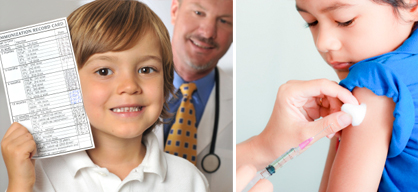
via istock
These figures may seem low, but Barbara Fisher, president of the National Vaccine Information Center which advocates for safety and informed consent, asserts that less than 10 percent of children who experience complications are actually reported, maybe even only 1 percent. The annual number of negative outcomes, therefore, could be 300,000 or higher – a substantial figure.
“People talk about adverse reactions, but nobody really seems to have a problem with that. People just take it as par for the course. A 100,000 people die each year from reactions and they say ‘well, that’s part and parcel for healthcare,’” Escobedo said.
Escobedo cites autism, asthma, developmental disorders and delayed cognitive function as substantial vaccine risks, although he admits studies need to be done to determine their exact frequency.
Some complications can be extremely serious, Fisher notes, such as severe brain dysfunction or facial paralysis.
“We don’t have the scientific knowledge to understand exactly what vaccines do in the body,” she explained, advocating for further research.
Cory counters that vaccines are like any other medicine: They may have side effects.
“The likelihood of you being damaged by a disease is so much more likely than to have a side effect from a vaccine. Nothing has shown that vaccines cause any sort of significant harm,” she said.
The most common side effects, Cory stated, are a sore arm or a mild fever. Cory believes that serious complications such as disease or death are “extremely unlikely” and notes that any medicine has “the potential to be deadly.”
“We’re talking about a population of millions and millions receiving vaccines. Out of those, there may be one or two who have serious adverse event,” Cory said. “(If) we took away the vaccines, there would be millions and millions of cases of diseases.”
Escobedo, on the other hand, believes that such positive proof of vaccines is just smoke and mirrors.
““Look at the efficacy of the vaccine. Have rates changed? No, they have not. Have deaths changed? No, they have not. Well, if more people are being vaccinated, less people should be dying,” he said.
He points to Gardasil, the cervical cancer vaccine, to make his case. While there are over a hundred types of HPV, Gardsil only protects against two: type 16 and 18. If a girl has been exposed to one of the two before receiving the injection, Gardasil actually would increase her risk of pre-cancerous lesions by 45 percent. While 26 percent of women ages 14 to 59 have a strain of HPV, only two percent of those strains are types 16 or 18.
The number of recommended vaccines has tripled in recent years.
Fisher reports that in the ‘80s, the CDC recommended 23 doses of 7 vaccines. Today that number is 69 doses of 16 vaccines.
While families may challenge this recommendation based on philosophical or medical objections, many states have laws requiring children to get vaccinated, ranging from about 10 to 16 mandated vaccines. Cory claims all recommended vaccines are essential: Skip one and your child could contract a deadly disorder.
Opponents, though, are also concerned by the additives in each injection. Vaccines contain toxins such as mercury preservatives and aluminum additives, both known to be dangerous.
“A person would have to be a 70 kg man to safely tolerate the amount of mercury in one Hep B shot,” Escobedo said. “And we’re giving it to a baby.”
Cory, however, said the ingredients are tested thoroughly for safety.
“You are getting a very minute, minute amount of chemicals or preservatives. And we feel very confident that the body can handle these things,” she maintained.
Escobedo is not convinced, and suggests parents use a staggered vaccine schedule, in which children start receiving vaccinations at age 2, allowing their immune system to develop more.
To make an informed decision, Fisher recommends parents read the insert published by the manufacturer, which lists the ingredients in the vaccine and the potential side effects. Families may also check the lot number on the vial and see what reactions have been reported.
If you do decide to vaccinate your child, you may want to be aware of the symptoms of vaccine reactions, such as jerking of the body and unusual, high-pitched cries. Not recognizing the signs can lead to more serious complications. The NVIC estimates that 50 to 60 percent of vaccine reactions that end in injury or death could have been prevented if doctors and parents had been educated about the signs.
For more information on both sides, visit www.nvic.org.
Do you take a side on this issue? Share why.
Tagged in: lux exclusives, philanthropy, cdc, centers for disease control and prevention, vaccinations, national vaccine information center, vaccines,
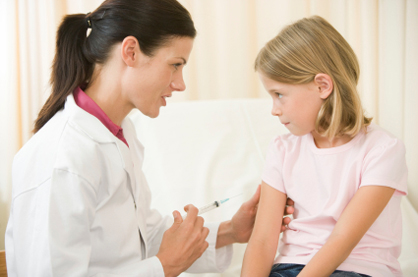
LadyLUX via istock