Nuclear power: Cleaner option or safety hazard?
Steep costs, declining demand and the recent disaster in Fukushima have inspired many nations to turn away from nuclear power and explore other energy sources. Worldwatch Institute’s recent report, Vital Signs Online, indicates that nuclear capacity, the power generated from all current nuclear plants, has declined as global consumption of nuclear energy has slowed.
After 1979’s Three Mile Island accident, the industry began to question the safety of nuclear energy and the development of nuclear power projects stalled. Following Chernobyl in 1986, the sector flattened out as concern grew. Due to the high cost invested in building the plants, however, many existing reactors were left in operation.
In 2010, the nuclear industry was gaining momentum at a pace that had not been seen since before Chernobyl. Then the disaster in Fukushima happened.
Much of new nuclear energy growth has occurred in emerging economies, particularly China. Although renewable energy is exploding in the Asian nation, so are coal plants. To keep pace with energy demand, China is building one coal plant a week. Should China veer away from nuclear power, it will likely be replaced with coal rather than renewable sources.
“Demand for energy is growing at such as quick rate that (China is) trying to pursue all energy sources in general,” Matt Lucky, a researcher at Worldwatch Institute, said. “Basically, if they can build it, they are going to do it because there is demand for it. So a lot of the delayed construction starts are in China and those are the most likely to continue in the future, while, in more developed countries where energy demand isn’t necessarily growing as quickly as China, those countries may have more ability in the future to reassess their nuclear ambitions and maybe switch to natural gas instead.”
While China is ready and willing to use any source available, including nuclear, the future of nuclear in Western Europe is debatable. After strong reaction in the wake of Fukushima, many countries once contemplating more nuclear plants have changed their minds. For France, which sources 80 percent of its electricity from nuclear power, the shift would involve building a new electricity sector, a major undertaking for such a large industrial country, making elimination of its nuclear energy unlikely.
Germany, on the other hand, has ambitious plans to eliminate its nuclear energy, having shut down eight nuclear reactors and eventually intending to decommission all its plants, despite currently sourcing 20 percent of its electricity from nuclear energy.
“What that presents for Germany is the challenge of meeting their energy demand,” Lucky explained. “They are a country that has been most progressive when it comes to renewable energy … It is difficult to say whether a country like Germany can make up that 20 percent with something like solar power. It would require huge investment, a roll out of technology at a scale never been seen before.”
For countries that currently rely on some nuclear energy and plan to wean that dependence, the challenge will be to keep up with the demand for electricity.
The major debate is whether nuclear is better or worse than coal or natural gas. While nuclear energy comes with clear downsides, so do alternative energy sources. As climate change becomes an increasingly pressing issue, countries have begun to realize that nuclear energy has definite advantages and to re-evaluate their priorities. Once the nuclear plant is built, it emits very little carbon compared to traditional fossil fuel energy sources, such as coal. In terms of carbon emissions, natural gas produces half as much as coal.
“The overwhelming positive to nuclear is the carbon savings,” Lucky said. “Obviously, there are a lot of carbon emissions to building a nuclear power plant, but if it actually runs for the 40 years it is supposed to, it is a better option than traditional fossil fuels in terms of carbon emissions. So with emissions, nuclear wins.”
While in the past, electricity from nuclear power plants was fairly cheap, prices have risen as the permit process has become more expensive. Carbon, on the other hand, has remained cheap.
“You don’t decide to build a nuclear power plant and the next day you start construction,” Lucky said. “Some permitting processes take up to a decade. It’s possibly the most complicated power plant to build because there are a lot of risks associated with it … So the different agencies you have to go through to get these things approved is pretty incredible.”
Safety poses the most serious obstacle to using nuclear power.
“If you could guarantee that nuclear energy was safe, you would have to say nuclear energy was the better source than fossil fuels,” Lucky declared. “But you can’t necessarily guarantee that … In a perfect world, where you didn’t have to worry about nuclear proliferation, about nuclear meltdown, nuclear energy would be great. But those are real concerns.”
However, the numbers can be misleading. When considering the number of accidents per year, nuclear energy appears to be the safest source of electricity available. However, most accidents at coal power plants are far less serious than those at a nuclear plant. It is further complicated by the difficulty in calculating the number of deaths and illnesses caused by a meltdown as radiation can create problems even decades after the exposure.
In 1979, the accident at Three Mile Island proved that the safety system in place worked: The containment shelf (a large, thick, concrete dome to limit an explosion) contained the meltdown within the confines of the plant, leading to little public exposure. In Chernobyl, the poorly designed safety system – there was no containment shelf and few safeguards – led to much death and destruction. Since then, few reactors have been designed in such a manner and safeguards have improved.
In fact, Lucky pointed out, “(Experts) claim their nuclear reactors can survive a terrorist flying a plane into the nuclear reactor … I don’t think there is any debating that in terms of nuclear energy and the risk of nuclear meltdown that the nuclear industry since the 1960s is becoming safer and safer and safer.”
The two major downsides to nuclear power are meltdowns and nuclear proliferation. The concern over proliferation is that the enriched uranium could be stolen and used to create nuclear weaponry. However, nuclear power relies on uranium enriched 3 percent whereas a nuclear weapon would use uranium enriched perhaps 80 to 90 percent.
“There’s a large difference between the uranium used in a traditional power plant and the uranium used in a nuclear weapon,” Lucky said. “If anyone were to take uranium from a nuclear power plant, they wouldn’t be able to build the equivalent of a nuclear weapon the way people traditionally think about it.” Thieves would be able to do significant damage, but the explosion would be smaller.
Although nuclear power poses a serious alternative to fossil fuels, any discussion of its use needs to take into consideration the safety aspects.
For more information, check out the report here.
Tagged in: lux exclusives, coal, nuclear power, natural gas, nuclear power plants, fukushima, power, power plants, worldwatch institute,
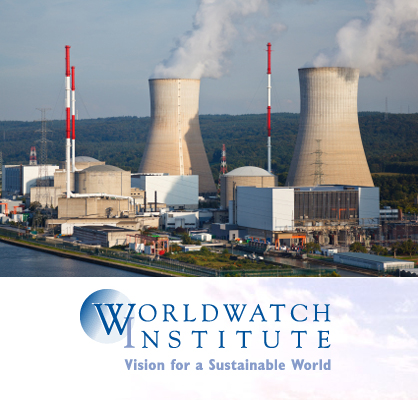
LadyLUX via istock